Production Approach
This page explains how Bobku turns stories into EDM and trance-inspired tracks: the production philosophy, the story-first writing process, and the tools that shape the sound of the puppet producer collective.
Production Philosophy
At the core of Bobku is a simple rule:
"This is music about making music, so it should honor the countless contributors it takes to make these things real."
Every track is built with a few guiding principles in mind:
- Honor the crew, not just the headliner. The songs are love letters to sound engineers, janitors, stagehands, runners, riggers, and everyone else who keeps the lights on and the PA humming.
- Be uplifting, or at least leave people better than you found them. The world is already heavy. These songs try to carry some hope, a moral, or a quiet “you’re not alone in this” under all the kick drums.
- Respect the source material that inspired you. If a track nods to classic trance, old-school Muppets, basement punk shows, or any other influence, it treats that history with respect. The point isn’t parody; it’s gratitude.
- Most importantly: make it danceable. No matter how convoluted the story or how nerdy the production tricks get, the track still needs to move a crowd. If it doesn’t groove, it’s not done.
Everything else—the puppets, the lore, the plug-in pileups—is built on top of that.
Story First, Genre Second
Every track starts as a story, not a preset.
Before a DAW ever opens, I usually know whose scene I’m writing: which puppet persona is “speaking,” where in the festival it happens, and what emotion I’m trying to land. From there I back into the genre and groove that fit that moment—hard trance for a big reveal, DnB-leaning chaos for a meltdown, Dutch-house bounce for the chef who misread the brief, and so on.
Because the project is so character-driven, I almost always start with lyrics and narrative. I sketch the spoken or sung lines, the phrases that need room to breathe, and the beats where I want the crowd to shout back. Once the words and emotional beats are there, everything else in the production is about giving those lines a frame that makes sense.
Explore the meaning behind the tracks? → Read the Track Dedications
Vocals First (and Why They’re a Headache)
Vocals are the biggest headache in my whole process—and the most important part.
Most of the time I’m mangling my own vocals (or sometimes my daughter’s) through Melodyne, Auto-Tune, Soundtoys, Voicemod, Plogue, and iZotope just to get something usable. I treat the voice like another synth I have to design: pitch-correcting, formant-shifting, saturating, doubling, and generally abusing it until it feels like a character instead of “just me talking into a mic.” I also strive to keep all the songs feeling like they came out of a studio rather than the same person, so I avoid "saving" the settings so every song sounds like a different person (hopefully).
Because the lyrics usually come first, the vocal takes become the skeleton of the arrangement. Once I’ve got a performance that sells the story, I start building everything else around its rhythm and phrasing.
A Jumbled Software Playground
The beats and instruments are intentionally chaotic under the hood.
I build stems with whatever feels right in the moment—Bitwig, Cubase, Serato, XLN Audio, Serum, Massive X, Sylenth1—whatever gets the sound I’m chasing for that character. If a track wants crunchy, broken textures, I’ll go hunting through Serato, TAL, Output Portal, Kilohearts Multipass, or Arturia Pigments with random or found sounds until something weird sticks.
There’s no single “Bobku template.” Each track is a small software pile-up tuned to the story: trance-leaning synth work here, DnB-style drums there, maybe a flamenco-flavored guitar loop warped into 4/4 if that’s what the character calls for.
Building in Sections Around the Story
Structurally, I usually build in sections that mirror the vocal structure.
I rough out intros, verses, builds, drops, and outros as separate little mini-projects wrapped around the lines I care about. Each section gets its own sound design and groove, locked to the lyrics and character moment it needs to support.
Once I’ve got a bunch of sections I like, I drag everything into FL Studio or Ableton Live and start turning it into a real track—cleaning up transitions, tightening automation, and gluing all those fragments together into something that feels like a single performance instead of a folder full of ideas.
And to answer the common question (and provide a little Easter egg): if you ever hear a micro-glitch in the tune or a syllable that’s just slightly off, it’s probably because I grabbed Track7-VoxA-Verse2-ad.wav instead of Track7-VoxA-Verse2-af.wav. Which is also why my commitment therapy is simple: when a song is “finished,” I delete the session, the stems, the MIDI—everything except the pre-master and final WAVs
Archive is a myth. Closure is real.
Final Polish in Audition
When I finally get a track where I want it, I pull the whole thing into Adobe Audition for final mastering.
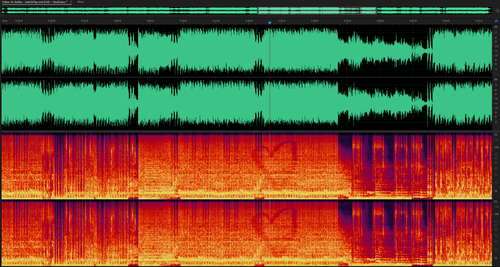
By that point, the session is already more complicated than it needs to be, so I intentionally keep this last step simple: a mastering chain that checks loudness, tames harshness, and tightens the low end without undoing all the character in the mix. Plus, going into a destructive mastering is good for the brain to shift gears and commit to your choices. It’s less about chasing a specific LUFS number and more about getting the song competitive and consistent while still sounding like it came from a slightly overcaffeinated puppet workshop instead of a generic preset pack. Also, if you don't understand how powerful spectral display is... I'm not going to try and be the one to convince you.
For Producers
If you’re here to nerd out: this is a non-exhaustive list of tools that may or may not show up in any given Bobku track—not counting the countless plug-ins, effects, and VSTs that wander in when I’m chasing something oddly specific.
Feel free to skim; the exact stack changes per song.
DAWs & Core Environments
- Bitwig Studio
- Cubase
- FL Studio
- Ableton Live
- Adobe Audition (final polish / mastering)
- Serato (for stems / mangling)
Voice & Vocal Processing
- Melodyne
- Auto-Tune
- Metamorph
- Voice-Swap
- ReSing
- iZotope tools (RX / Nectar / Ozone, depending on the problem)
- Soundtoys (Decapitator, Little AlterBoy, EchoBoy, etc.)
- Voicemod
- Plogue chipspeech / other voice toys
Synths & Instruments
- Serum
- Massive X
- Sylenth1
- Arturia Pigments
- XLN Audio instruments and drums
Sound Design, FX & Weirdness
- Output Portal
- Kilohearts Multipass and friends
- TAL plug-ins
- Serato for slicing, pitching, and abusing found sounds
Mix / Master Utilities
- Whatever EQs, compressors, limiters, and analyzers get the track over the finish line
- Final master pass in Adobe Audition
None of these are mandatory ingredients; they’re just the tools I reach for when a character, scene, or lyric needs a particular texture. The only hard rule is the one from the philosophy section: honor the people behind the music, respect your inspirations, and make something people can actually dance to.